Grinder-Safe Coffee Bean Recommendations
These coffees are suitable for super-automatic espresso machines and are available through Amazon in Canada and the United States.
-

Lavazza Gran Crema
Medium-DarkThis is my #1 recommendation if you make milk drinks. The slightly darker roast punches through the milk better than the Super Crema.
-

Lavazza Super Crema
MediumThe daily driver. Notes of hazelnuts and brown sugar. Long-lasting crema. Tastes like Italy.
-

49th Parallel Epic Espresso
Light-MediumOne of Canada's most respected craft roasters. Small-batch roasted in Vancouver, the Epic Espresso pulls a smooth, bright shot with floral notes, low acidity, and a velvety finish.
-

Lavazza Qualita Oro
MediumThe sweetest of the bunch. If you find espresso too bitter, switch to this. It has a very smooth, non-aggressive finish.
-

Kicking Horse Cliff Hanger
MediumA Canadian legend. Since it is a Medium roast, it is much safer for your machine than their other dark roasts (which are too oily).
 Check Amazon.ca
Placeholder
Check Amazon.ca
Placeholder
-

Taste of Portugal Rossio
Medium ProvisionalA taste of Lisbon in your cup. Portuguese roasting is lighter than Italian — you get rich chocolate and a silky body without the aggressive bitterness. A fascinating alternative to the usual Italian blends.
-

Balzac's Farmers' Blend
MediumA Canadian craft roast with real character. Small-batch roasted in Stratford with a brisk acidity and notes of pine nuts, green apple, and chocolate. Not for everyone — if you want sweet, pick Qualita Oro. But if you want clean and complex, this is it.
Check Amazon.ca
Placeholder
-

Ethical Bean Lush
Medium-DarkOrganic, Fairtrade, and roasted right in BC. The medium-dark roast develops real depth — toffee and baker's chocolate. A note of honesty: this one shows mild surface oils, so it's better suited to DeLonghi and Philips machines than Jura. Clean your hopper monthly.
-

Lavazza Crema E Aroma
MediumBalanced medium roast with an intense, earthy flavour and long lasting crema.
-
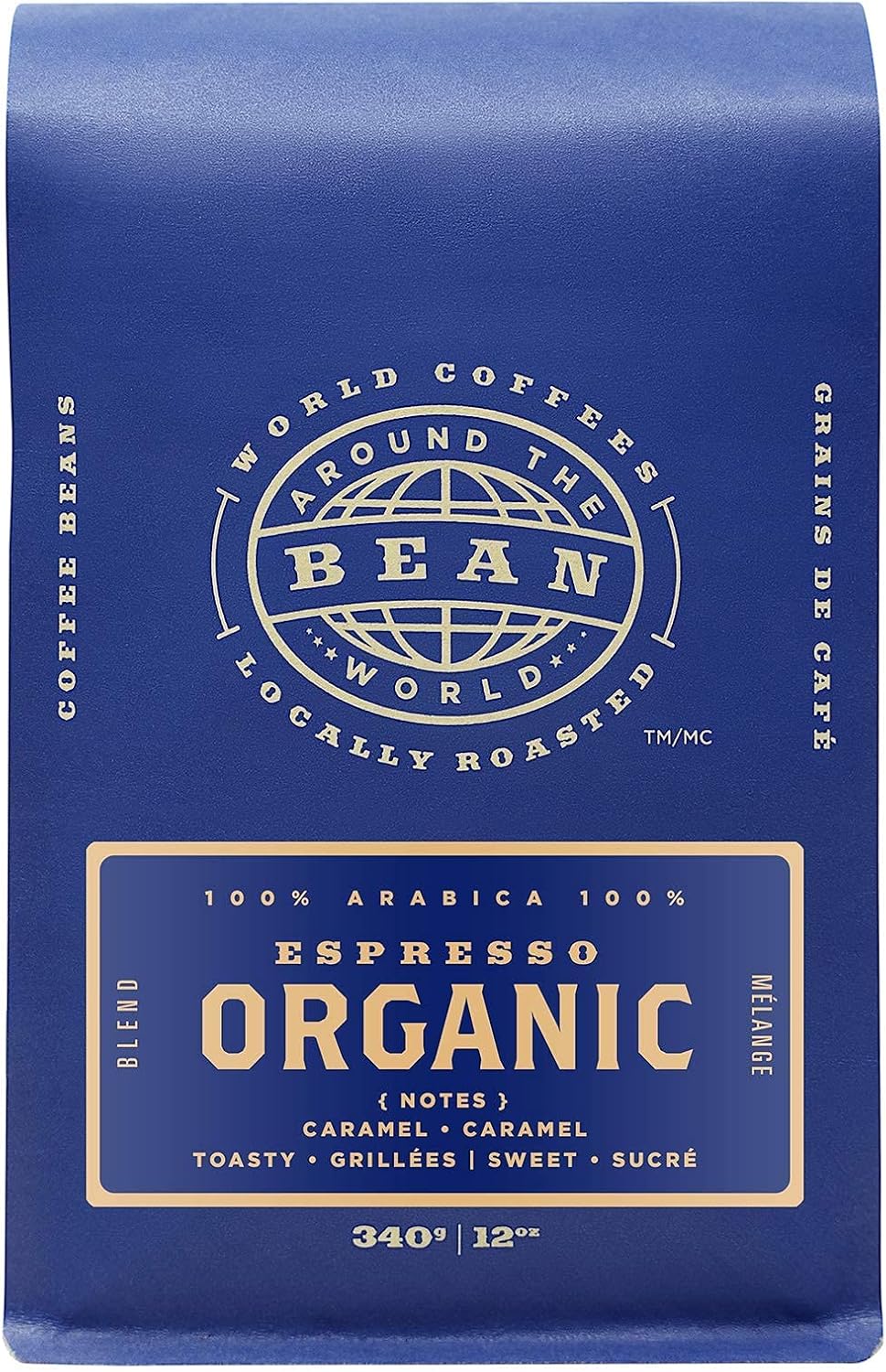
Bean Around The World Organic Espresso
Medium ProvisionalA Vancouver roaster since 1990, and a consistent Amazon pick for organic espresso. This balanced blend delivers chocolate and toasted caramel — clean, approachable, and easy on your grinder.
-

Tim Hortons Original Blend
MediumCanada's most reliable coffee. That 62-year-old recipe is unchanged for a reason — smooth, balanced, no drama. It pulls a clean medium-roast shot and won't leave residues in your grinder.
-

Kicking Horse Hola
LightLight, bright, and grinder-friendly. A bone-dry surface means it flows through the burrs without issue. Tropical notes of berries, brown sugar, and nougat — a good pick if you prefer your espresso without bitterness.