Is Your Expensive Machine
Choking on Oil?
I thought the shine meant "fresh." I was wrong. Here is why oily beans are the silent killer of super-automatic grinders.
Disclosure: As an Amazon Associate I earn from qualifying purchases.
When I bought my first super-automatic espresso machine, I made a rookie mistake. I walked into the grocery store and grabbed the bag with the shiniest, darkest beans I could find.
I thought that oily sheen meant they were fresh, potent, and rich. In reality, the coffee tasted bitter, burnt, and sometimes even stale. Worse than the taste? The machine hated it.
Three months later, the grinder sounded like it was chewing on gravel. The coffee was weak, and the machine kept asking me to "Fill Beans" even though the hopper was full.
I thought the machine was broken. It wasn't. It was just clogged with tar.
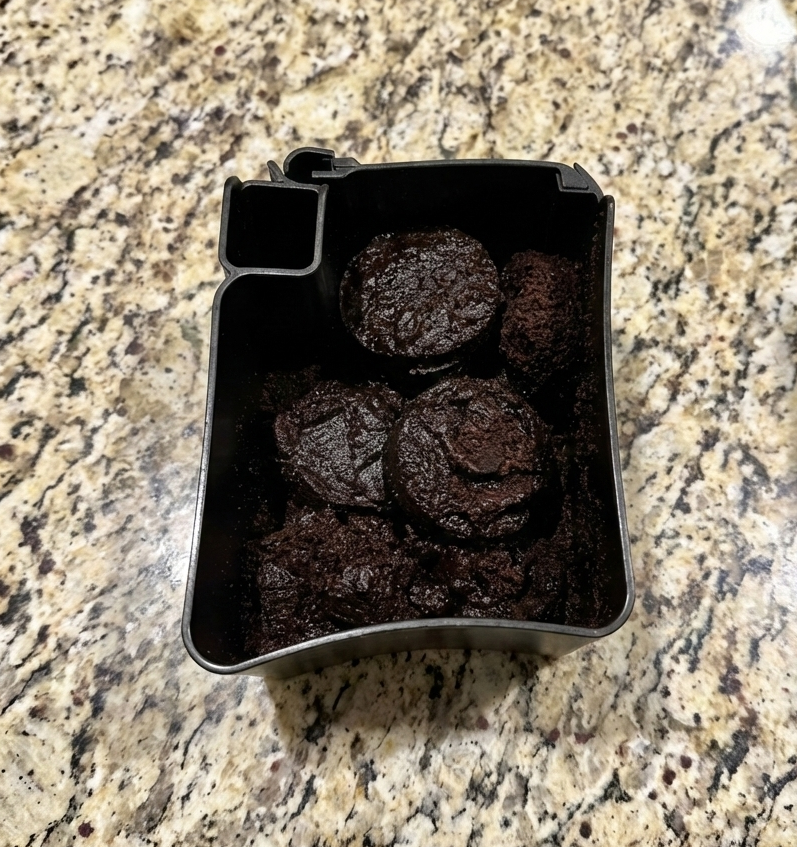
The Problem: Gravity vs. Oil
See that picture above? That wet, sloppy mess in the bin isn't normal. That is what happens when oil builds up in your grinder.
Super-automatic machines (whether it's a Jura, Saeco, Philips, or DeLonghi) rely on gravity-fed grinders. The beans need to slide down a chute into the burrs.
When you use oily beans—the kind that look wet or shiny—they don't slide. They stick. They bridge together above the grinder, creating a clog. The grinder spins freely, grinding nothing but air, while that bitter oil turns into a tar-like sludge on the burrs.
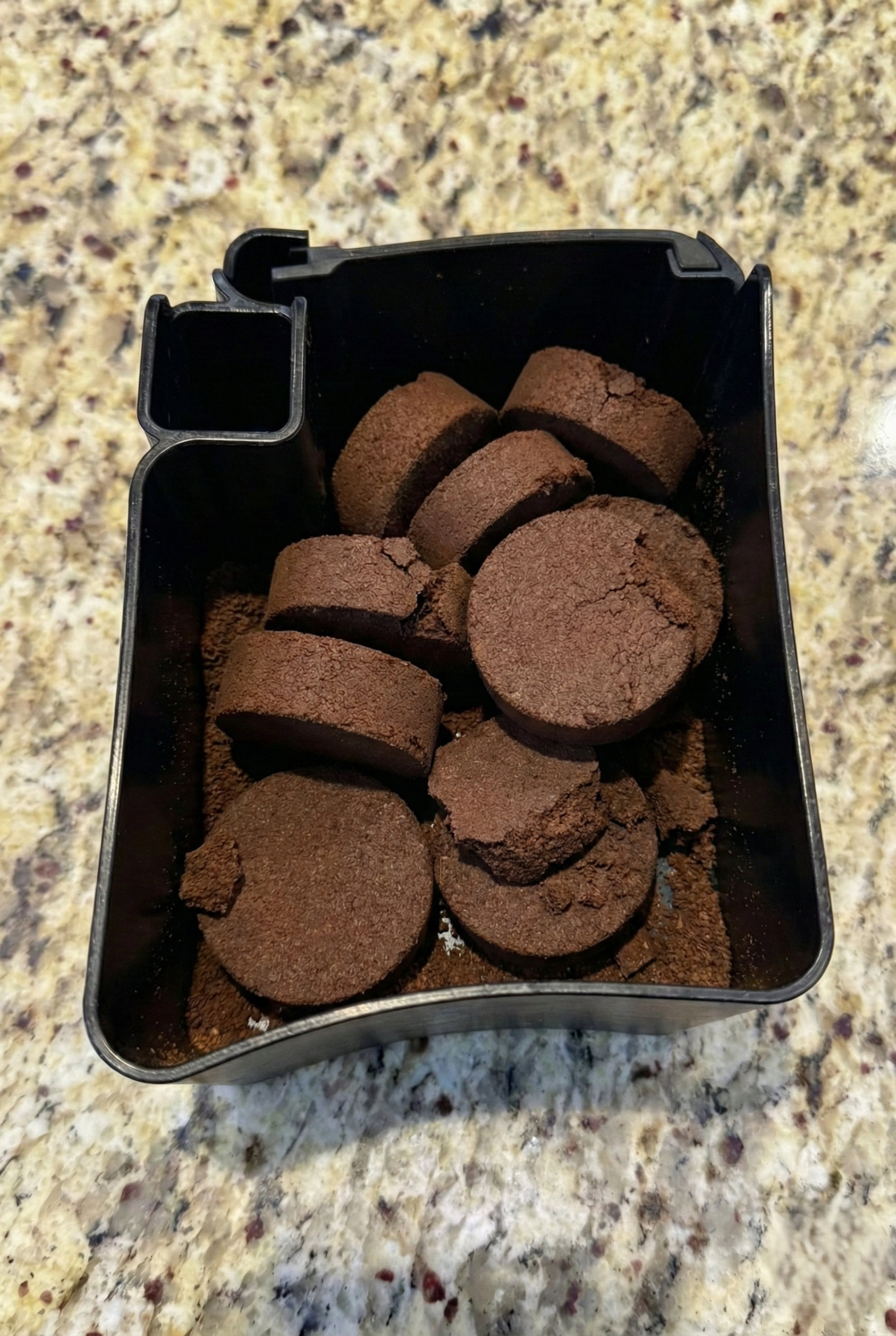
The Solution: Dry Beans
This second picture is what your used coffee grounds should look like. We call this the "Hockey Puck."
This result came simply from switching to a medium roast with a matte, dry finish. Because the beans are dry, they shatter cleanly in the grinder. They don't stick to the chute. The machine compresses them into a tight puck, extracts the rich espresso flavors (instead of just the burnt ones), and knocks the puck out cleanly.
No residue. No mold. No service calls.

Why Manufacturers Don't Warn You
Most manuals have a tiny warning about "oily beans" buried on page 40, but they don't explain why. The truth is, marketing teams want you to believe these machines can handle anything.
They can't. If you put sticky, caramelized beans into a $2,000 piece of Swiss engineering, you are essentially pouring glue into the gearbox.
Common Questions (FAQ)
My beans are shiny. Should I throw them out?
How do I clean the oil if it's already there?
Does using oily beans void my warranty?
Can I still get strong coffee without Dark Roast?
Stop Pouring Glue in your Grinder
We tested 50+ bags of coffee to find the ones that deliver rich crema without the oily sludge.
Is your grinder already dead? Compare replacement machines here.