Are Your Coffee Beans Safe for a Superautomatic Espresso Machine?
Many superautomatic espresso machine owners unknowingly damage their grinders by using overly oily coffee beans. Dark roasts and certain commercial beans can produce excessive surface oil that clogs grinders, contaminates burrs, and eventually leads to costly repairs.
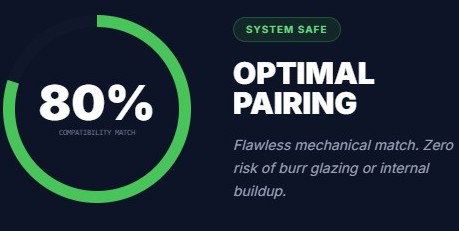
To help solve this problem we built the Bean Compatibility Engine, a database-driven tool that analyzes coffee bean oil levels against the mechanical tolerances of specific superautomatic espresso machines.
Check Your Beans Instantly
Use our Bean Compatibility Engine to instantly determine whether a coffee bean is safe for your machine's grinder. Database includes over 250 coffee beans tested for surface oil levels and grinder compatibility.
Launch Bean Compatibility Calculator →Why Oily Coffee Beans Are the Enemy of Superautomatic Machines
Superautomatic espresso machines contain compact burr grinders designed for convenience and automation. Unlike commercial grinders, these internal systems are more sensitive to oils and residue.
When beans contain excessive surface oil, several problems can occur:
- Oil buildup coats grinder burrs
- Ground coffee sticks inside dosing chambers
- Bean hoppers develop residue that causes feeding issues
- Grinder sensors may misread doses
- Long-term burr wear accelerates
These issues are one of the most common causes of grinder failure in home espresso machines.
Can Oily Beans Actually Damage an Espresso Machine?
Yes. While many machines can tolerate moderate oil levels, highly oily beans often create a sticky residue that accumulates throughout the grinder system.
Over time this buildup can cause:
- Grinding inconsistencies
- Blocked coffee chutes
- Reduced extraction quality
- Motor strain and premature wear
Using the correct beans dramatically reduces maintenance and extends the lifespan of your machine.
Examples of Bean Compatibility Scores
The Bean Compatibility Engine analyzes coffee bean surface oil levels and compares them against the grinder tolerances of your selected espresso machine.
| Coffee Bean | Typical Oil Level | Compatibility Score |
|---|---|---|
| Starbucks French Roast | Very High | 30 |
| Lavazza Super Crema | Medium | 72 |
| Lavazza Qualità Oro | Low | 88 |
Scores vary depending on the espresso machine selected in the calculator, since grinder tolerances differ between manufacturers.
How the Bean Compatibility Engine Works
The compatibility engine uses a database of more than 250 coffee beans and analyzes each one against the characteristics of common superautomatic espresso machines. Factors considered include:
- Surface oil levels
- Roast darkness
- Bean density
- Grinder tolerance thresholds
The result is a compatibility score that indicates how safe a particular bean is for long-term use in your espresso machine.