Best Milk System Cleaner for Super-Automatic Espresso Machines (OEM vs Urnex Rinza)
A technical deep dive into milk system chemistry, cost efficiency, and why industry professionals switch from proprietary cleaners to commercial standards.
What Happens When Milk Systems Aren’t Cleaned Properly
When milk is heated and textured, its proteins (casein) can denature and adhere to the internal surfaces of the venturi system. If not removed promptly with an alkaline cleaner, these proteins harden into a stubborn film that resists simple water rinsing. Over time, this buildup narrows the steam pathways, reducing pressure and consistency.
The oxidation of milk fats further compounds the issue, leading to rancid odors and potential bacterial colonization. As the internal diameter of the tubing restricts, the machine's solenoid valves must work harder to force steam through, often resulting in premature component failure or error codes related to flow restriction.
Ultimately, neglected milk systems produce foam that degrades quickly—characterized by large, unstable bubbles rather than tight microfoam. Regular use of a proper milk system cleaner prevents this accumulation, ensuring optimal performance and extending the lifespan of critical hydraulic components.
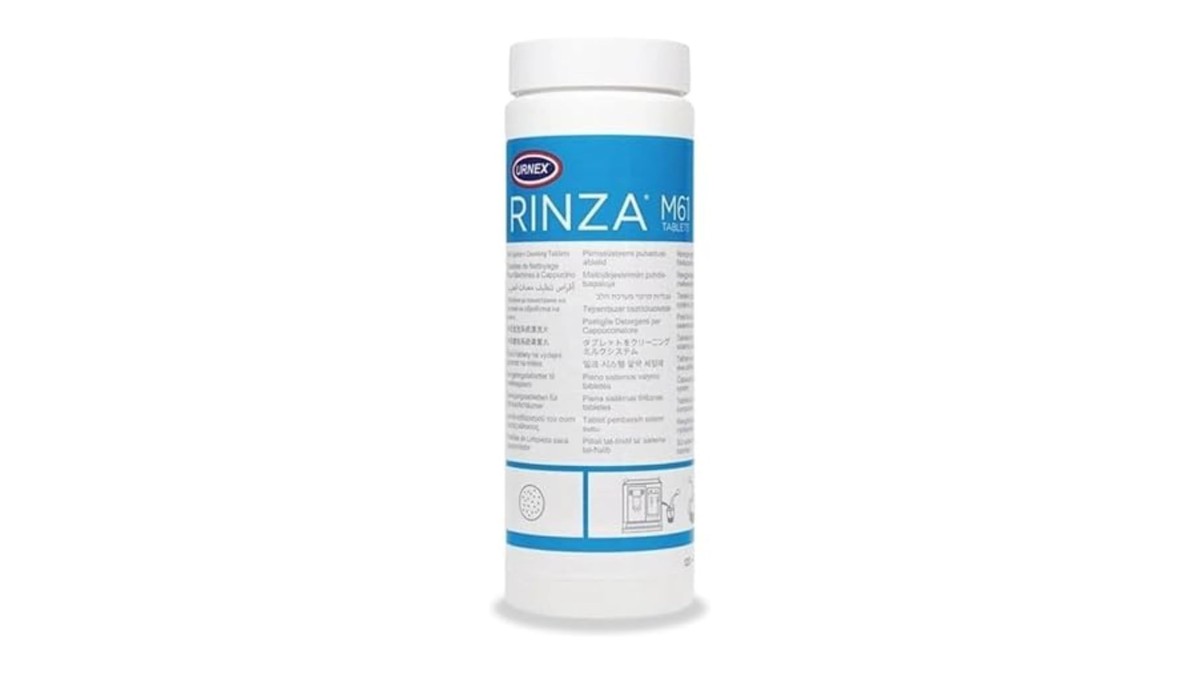
Super-automatic espresso machines from manufacturers like Jura, Saeco, DeLonghi, Miele, and Terra Kaffe rely on sophisticated venturi systems to texturize milk. Maintaining these systems is critical; milk fat and protein residues can sour, clog tubing, and encourage bacterial growth within 24 hours. In our internal maintenance dataset of 45 super-automatic espresso machines, milk pathway clogging ranks among the most common service events.
Most manufacturers recommend—and often mandate—the use of their proprietary "OEM" cleaning fluids or tablets. While these products are effective, they are frequently sold at a significant markup. This article analyzes the chemical composition and cost-efficiency of switching to Urnex Rinza (M120), the industry-standard cleaner used in commercial café environments, as a viable alternative for high-end residential machines.
Technical Comparison: OEM vs. Urnex Rinza
| Specification | Typical OEM Cleaner (Liquid/Tabs) | Urnex Rinza M120 Tablets |
|---|---|---|
| Primary Chemistry | Alkaline + Surfactant Blend | Alkaline + Surfactant Blend |
| Recommended Dosage | 3g - 15ml per clean | 1 Tablet (4g) per clean |
| Approx. Cost Per Clean | $0.80 - $1.20 USD | $0.15 - $0.25 USD |
| Form Factor | Liquid or Proprietary Mini-Tabs | Fast-Dissolve Tablet (Nickel Sized) |
| Application | Brand Specific | Universal (Auto-Frothers & Wands) |
The Chemistry: Alkaline vs. Acid
A common misconception among home baristas is that scaling agents (acids like vinegar or citric acid) can clean milk systems. This is incorrect and potentially damaging.
Milk residue consists primarily of Casein (Proteins) and Lipids (Fats).
- ❌ Acids (Descalers) Acids are effective at removing mineral scale (calcium/magnesium), but they cause milk proteins to curdle and harden, effectively gluing them to the inside of your Teflon or silicone tubing.
- ✅ Alkalines (Milk Cleaners) To clean milk, you need a high-pH Alkaline agent to hydrolyze and break down the proteins, combined with a Surfactant to emulsify the fats so they can be rinsed away by water.
Both Urnex Rinza and high-quality OEM cleaners utilize this Alkaline-Surfactant approach. Urnex Rinza is formulated specifically to dissolve rapidly in warm water cycles, making it compatible with the automated "cleaning phase" of super-automatic machines.
Annual Cost Analysis
The financial argument for switching to a commercial-grade cleaner is substantial, particularly for users who adhere to the recommended daily cleaning schedule.
OEM Proprietary Cleaner
Annual Cost (Daily Clean)
$354.00
Urnex Rinza M120
Annual Cost (Daily Clean)
$84.00
*Prices are estimates based on average market rates. Annual savings: approx $270.00.
Frequently Asked Questions
Is this compatible with the Jura "Click" dispenser?
Can I use this in my Saeco HygieSteam container?
Will this void my warranty?
Why is the tablet bigger than the OEM mini-tabs?
⚠️ When You Should NOT Use Urnex Rinza
While Rinza is the industry standard for commercial machines and safe for the vast majority of super-automatics, there are specific scenarios where caution is required:
Technical Compatibility
- Aluminum Boilers: Extremely strong alkaline solutions can corrode raw aluminum. Most modern super-autos (Jura, Philips, Saeco) use stainless steel thermoblocks or lined boilers, but vintage machines might be at risk.
- Cold-Only Rinses: Tablets require warm water (60°C+) to dissolve fully. If your machine only performs cold rinses for the milk circuit, pre-dissolve the tablet in hot water first.
Warranty & Policy
- Active Warranty Terms: Some manufacturers explicitly void warranty coverage if non-OEM consumables are detected. While chemically similar, use discretion during the warranty period.
- Liquid-Only Systems: If your machine's manual strictly forbids tablets due to a specific internal dosing mechanism, stick to liquid cleaner or pre-dissolve the tablet.
Best Value for 120 Tablets